
Statement on Professor Jason Arday
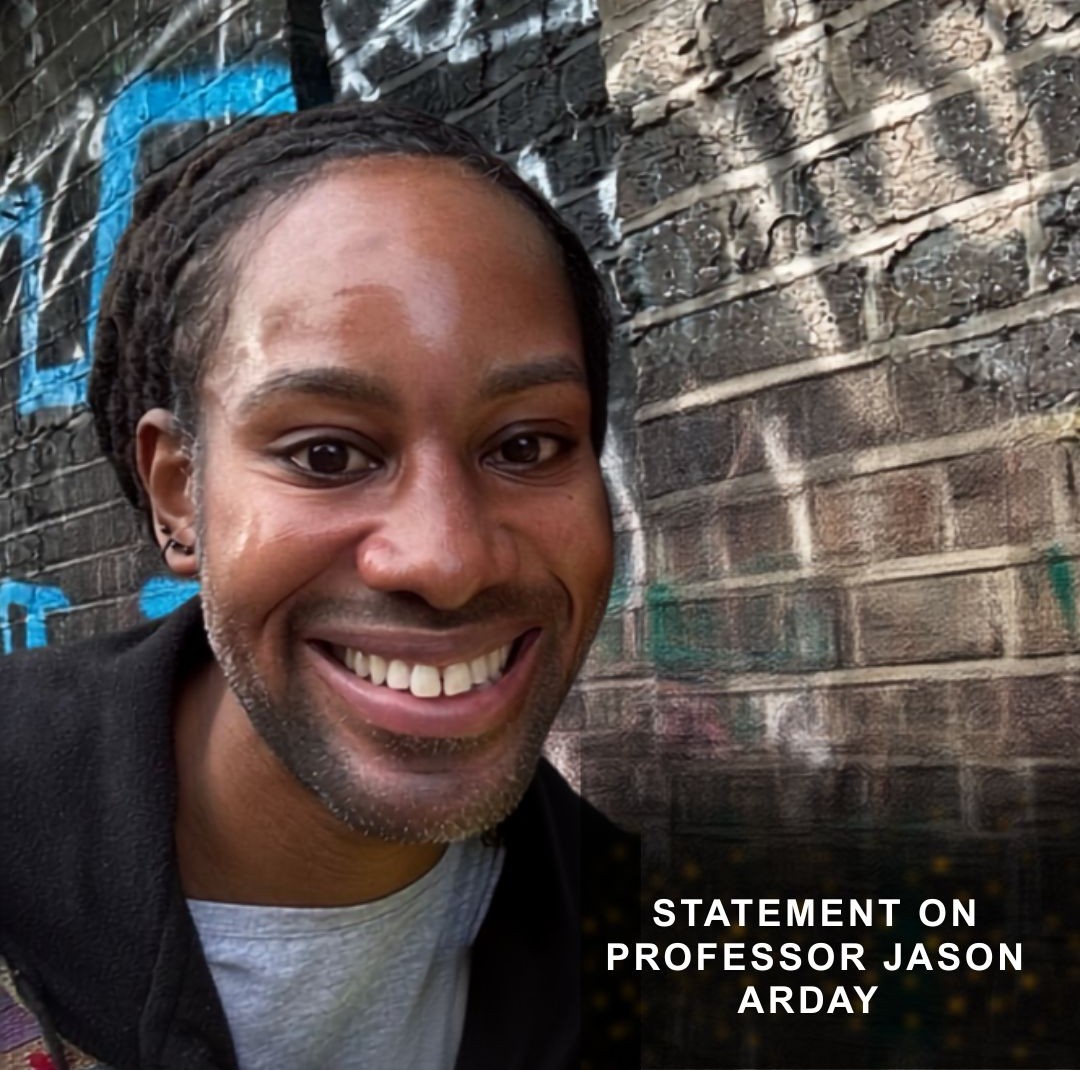
Image Credit: Katucha Bento
Professor Jason Atta Kwei Arday will be missed as a brilliant scholar, dear father, son and friend, prolific athlete, and anti-racist disruptor, among so many other great things that composed his life and character as a human being. We extend our condolences to his family and friends, and all who supported him.
As we remember Professor Arday, aiming to honour his life and show our gratitude, it is important to acknowledge his remarkable contributions to academia, politics and society as a whole through his expertise and experience. He was a Trust Board Member for organisations advocating for social justice, such as the Runnymede Trust and the Racial Justice Network. He collaborated with early-career scholars and students to elevate their projects and offer mentorship, an often invisibilised task that forms part of the pastoral labour of academia. Professor Arday also advised the UK Parliament on several occasions on policy and public engagement regarding better access to education, mentoring and guidance for young people, and youth employment. His work had an impact and promoted positive change for social justice, including through his involvement with charities such as Autism Centre of Excellence, Shooting Star Children’s Hospice, Shelter, and many other campaigns advocating for disabled people and people of colour in Britain.
Professor Arday was a target of disproportionate scrutiny across sections of academia and the media, reproducing a recognisable pattern of anti-Black racism based on pseudoscientific ideas that justified some of humanity’s horrors, such as slavery, torture, lynching and dehumanised accounts of the roles and places Black people should occupy in society. We reject the genealogy of eugenics to corroborate the policing of Black legitimacy and excellence. We condemn the racism in the way the media hounded a Black man to his death even after his resignation, and despite the plagiarism claims not being upheld, and despite warnings about the fragility of his mental health. The formulation to accuse and investigate Professor Jason Arday staged a colonial logic of public humiliation. This staging reproduces a historical method attached to the colonial ‘pillory culture’ and to the racial disparities within academic institutions of the Global North, some of which are deeply discussed in Professor Arday’s studies.
The media coverage suggesting that the hiring of Professor Arday was a decision based on Equality, Diversity and Inclusion (EDI) is perplexing. First, because it is used to diminish the merit of Professor Arday’s presence in a prestigious Higher Education Institution in Britain, however, we do not believe that reparative actions would be a demerit to any hiring process. We are demonstrating how the media argument is used to devalue the cognitive, professional, and emotional skills requested in standardised as mainstream hiring processes that have been historically designed by and for whiteness. Second, because it misrepresented what EDI policies actually do and questioned its importance as an institutional framework that supports universities in creating safer and more equal environments for staff, students and members of the community.
In the present political sphere, EDI actions are being questioned by conservative public discourses, leading to disastrous consequences across the United Kingdom. The main purpose of EDI in British HEIs, and across institutions globally, is to implement a series of structural actions to address and tackle the effects of historical and systemic inequality and injustice, creating improved working environments across HEIs for all people.
When we think about decolonising universities and engage with campaigns such as ‘Why Is My Curriculum White?’ and ‘Why Isn’t My Professor Black?’, we must reflect on the conditions Black academics and academics of colour are given to survive and thrive in academia, alongside the affirmation that remains quite important, despite the almost forgotten by the wider public: Black Lives Matter.
Professor Jason Arday shared his thoughts with us about what is required to change when RACE.ED had the honour of hosting him for our 10th podcast episode. He said:
“What does decolonising look right now? And how can we all engage in a collective sense of responsibility in insuring that we all lift or hold the burden of emotional and intergenerational labour? I think that it is really important, and with that, we need to continuously redefine what ‘allyship’ actually means. Part of what that means is engaging with discomfort, and difficult uncomfortable past.”
For he who is now our ancestor, Professor Jason Arday, we take these words to ignite that passion and trust in loving possibilities, and to build a future together that is finally free from -isms and -phobias in academia and the world. We shall honour and continue the work of this bright, always-smiling human being.
Rest in peace, love and power, Professor Jason Arday.
Asé.
RACE.ED Network
BAME Staff Network
QUEER.ED Network
SPS EDI Committee
Staff Pride Network
Sue Fletcher-Watson, on behalf of the CMVM EDI Committee
Race and Inclusivity in Global Education Network (RIGEN)
Womxn of Colour Collective